An early morning visit to the oldest Onsen in Japan. Although it is a creaky, old, funky building, it is the heart of Matsuyama. Architecturally, it is a combination of traditional Japanese architecture and an exhibition of vibrant, every day Japanese life. On this particular day, an exhibition of textiles was on display, as part of the sliding screen doors that shade the floors of the onsen.
http://www.jnto.go.jp/eng/location/spot/hotspri/dogo.html
This is the only onsen in Japan that has a onsen for use by the Imperial family only. It is open to the public for a tour but not for use. It was last used by Emperor Hirohito.
The crane is the symbol of the onsen and is said to be how the onsen was discovered. It is said that the crane was healing itself in the waters of the hot spring when the spring was discovered.
I wrote about my onsen experience in a previous posting here.
Showing posts with label Dogo Onsen. Show all posts
Sunday, July 3, 2016
Wednesday, June 19, 2013
Dogo Onsen Area - Matsuyama
The onsen area of Matsuyama is touristy but it's Japanese touristy so it is a fun place to walk around and visit. During special times of the year there are celebrations outside Dogo Onsen featuring drums, song and dance, if you are lucky enough to stumble upon them!
| Pilgrims making their visit |
| The famous Botchan train |
| You are here |
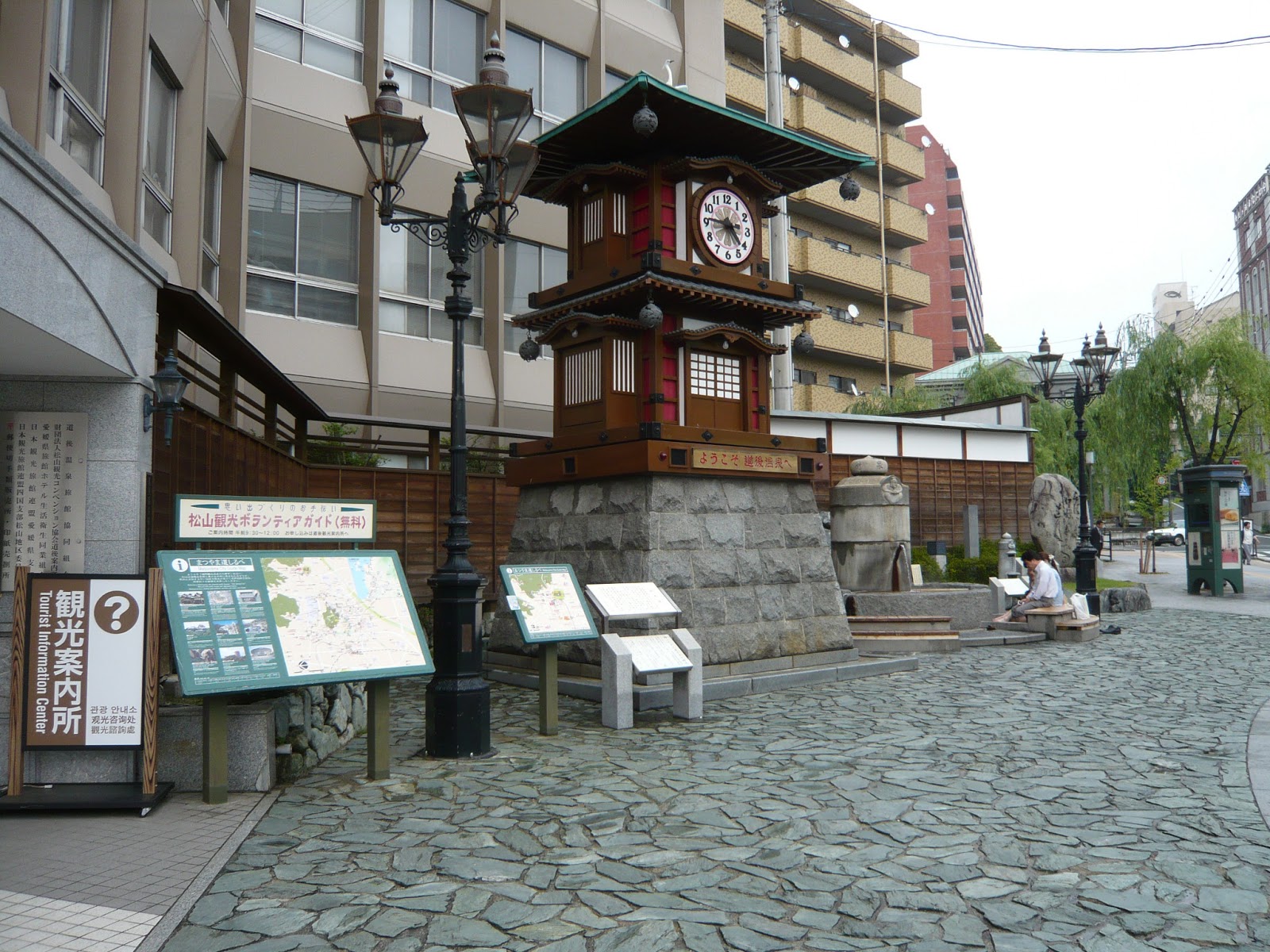
| Famous animated clock |
| Great looking little car |
Labels:
Dogo Onsen,
Matsuyama
Tuesday, June 11, 2013
Hayaku: A Time Lapse Journey Through Japan
Labels:
Dogo Onsen,
Imabari,
Matsuyama
Monday, June 3, 2013
Wednesday, February 20, 2013
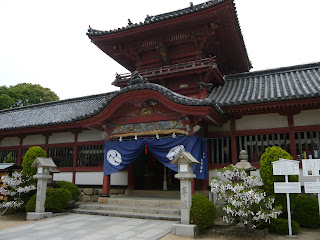
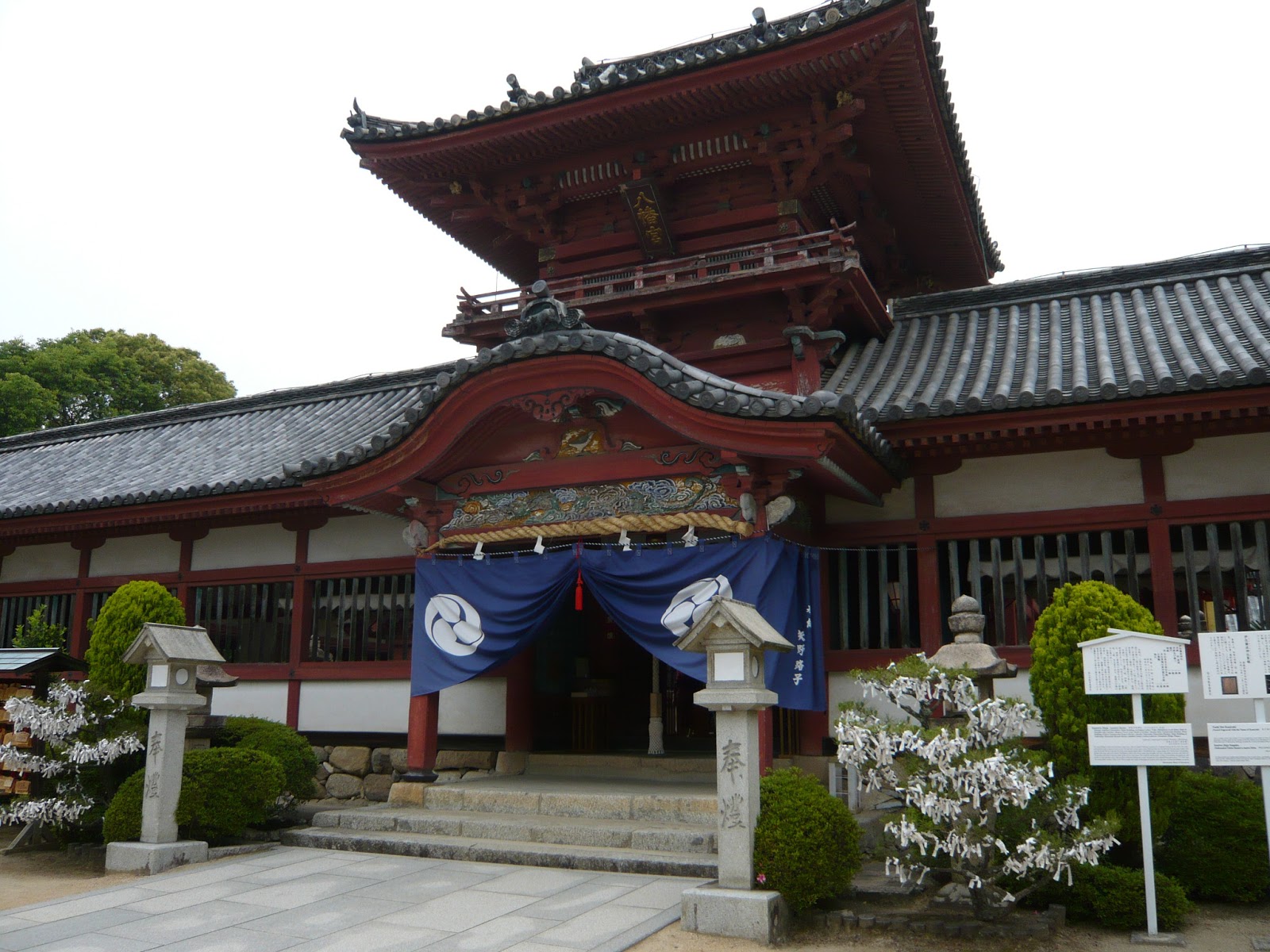
Isaniwa Jinja (Isaniwa Shrine) - Matsuyama (near Dogo Onsen)
Isaniwa Jinja (Isaniwa Shrine) – Honden tsuketari Sukashibei (Main Buildinig, including Lattice Wall), Moshidono oyobi Roka (Hall of Humility and Corridor), Romon (Tower Gate), Kairo (Corridor), Massha Kora Tamataresha Honden (Main Building of Kora Tamastaresha Branch Shrine), Massha Tokwasha Nittareisha Honden (Main Building of Tokiwasha Nittareisha Branch Shrine), Ishidoro (Stone Garden Lanter), Munafuda (Ridge Plaque).
The main building is built in the Hachiman-zukuri style, with two aligned buildings connected by a raingutter between the two roofs. The space underneath the gutter is known as the ai no ma. The front half is in the nagare-zukuri (flowing) style, the rear half in the kirizuma-zukuri (gable roof) style. The Lattice Wall has a tile roof with lovely green diamond-shaped lattices. The Moshidono has a cypress shingle roof, with the front of the building, parallel to the ridge, open to the outside. The Romon is made in the irimoya-zukuri (hip and gable roof) style, with double eaves and a clay tiled roof. The guardian king statues at the four corners of the room area are a rare feature. The woodword and decorative carvings of the buildings are painted red, with touches of white and other colors, while the pillars of the main building are covered with gold leaf, all in splendid Momoyama period (1573-1603) style. The wooden Kairo (corridor), which is over 100m in length, and a stature of Saint Ippen are evidence of the long history of Shinto and Buddhist syncretism. – Matsuyama Board of Education.
The Isaniwa Shrine was built by Matandara Sedanaga, the then lord of Matsuyama, in 1667 in order to show his gratitude for success of archery on horseback. The shrine called Hachiman style is rare - even all over Japan and is designated by the Dept. of Culture as an important cultural asset.
Hachiman is the Japanese god of archery and war, combining elements of both Shinto and Buddhism. Hachiman is often called the god of war. He is considered the protector of Japan and the Japanese people. The name means God of Eight Banners, referring to the eight heavenly banners that signaled the birth of divine Emperor Ojin (the 15th emperor of Japan). Emperor Ojin is said to be interred at this shrine.
Subscribe to:
Posts (Atom)